Desk Cable Management System Fit and Compatibility
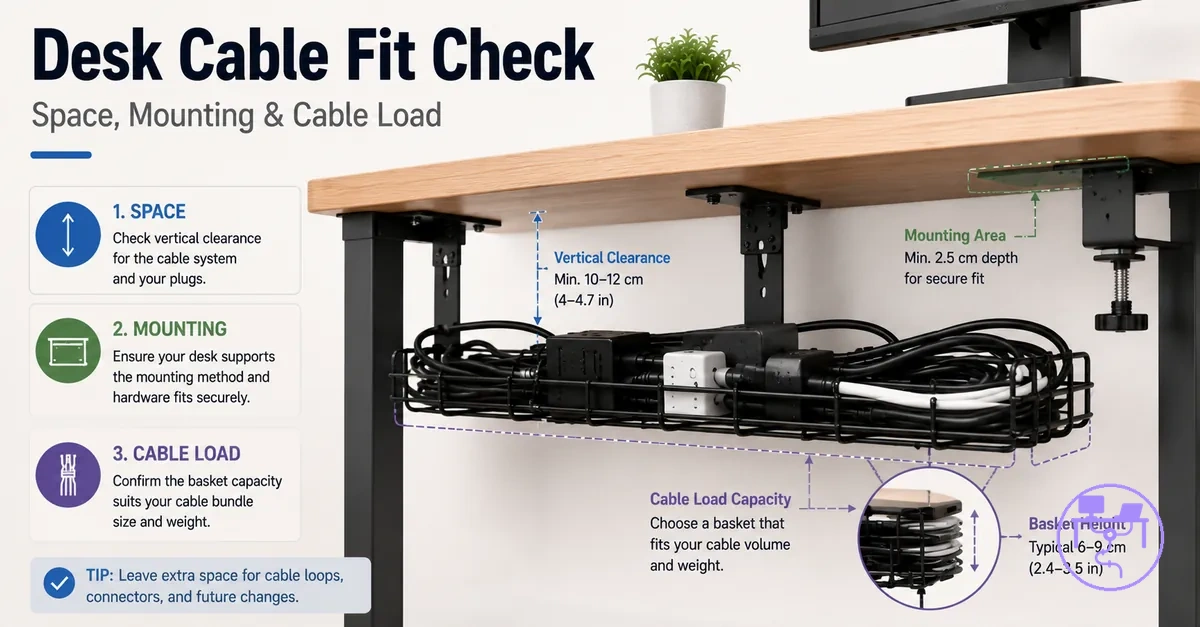
A desk cable management system fit is the compatibility relationship between the organizer, the desk, the cable load, and the mounting environment. The system may work well only when desk dimensions, under-desk space, cable capacity, mounting method, access, and clearance support the same setup.
Fit depends on the desk, cable bundle, and mounting conditions rather than one product claim. A tray, channel, sleeve, or clip setup can become unsuitable if the desk surface is weak, the power strip has poor plug clearance, the cable load is bulky, or the mounting area limits stability.
The fit-check summary below organizes the main compatibility signals before selection or installation details. Each point connects one condition to the effect it can have on access, stability, clearance, or practical use.
- Desk dimensions: width, depth, desk thickness, and under-desk space affect where the system can sit without blocking knees, drawers, or cable exits.
- Cable load: cable count, adapter bulk, and tray capacity affect whether the system can hold the bundle without crowding access.
- Mounting method: clamp, screw, or adhesive mounting depends on the desk surface, contact area, and load direction.
- Power strip fit: plug clearance, switch access, and cable exits affect whether the power strip can sit inside or beside the under-desk system.
- Use-case conditions: moving desks, larger workstations, and future device changes may require extra clearance, cable slack, and adjustment space.
What Fit Means for a Desk Cable Management System
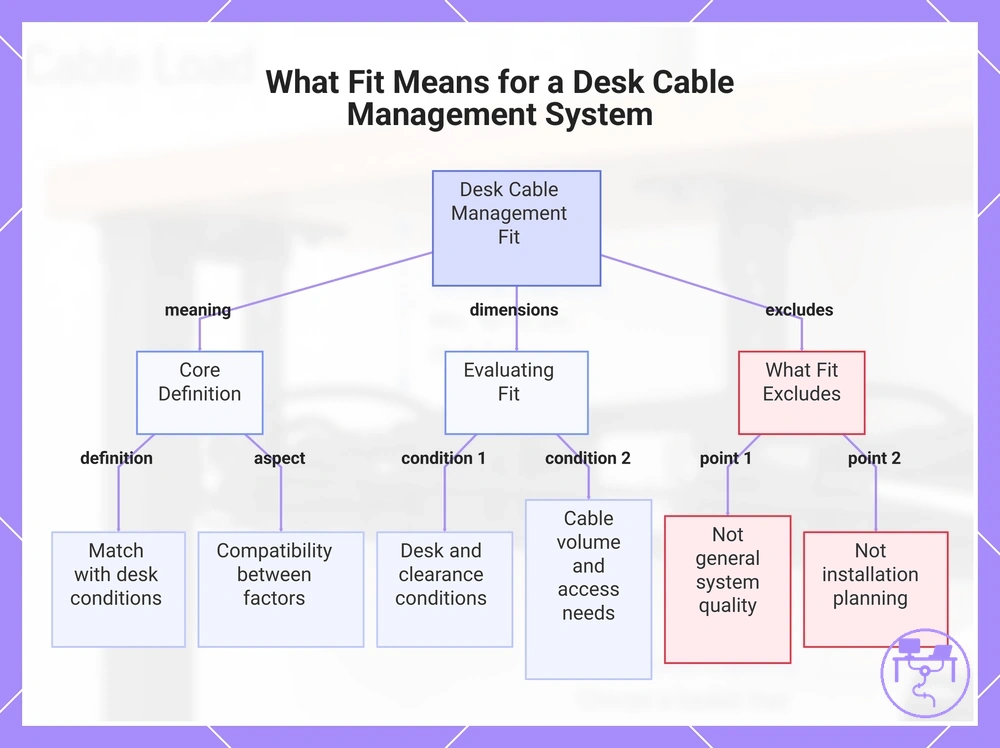
Fit is the match between a desk cable management system and the desk surface, cable volume, mounting method, and access needs. It describes whether the setup can be used practically within the available space and conditions. Fit focuses on compatibility between connected factors rather than on a single component.
The main fit dimensions clarify how compatibility is evaluated across a cable management setup. Each dimension affects suitability, usability, or access in a different way.
- Desk surface: the desk condition and surface characteristics influence mounting compatibility.
- Cable volume: cable load, tray space, and adapter bulk affect whether available space supports practical use.
- Mounting method: the chosen mounting method must suit the available mounting point and desk configuration.
- Clearance: under-desk clearance affects available space around cables, accessories, and movement areas.
- Access: access to cables, ports, and power connections affects everyday usability.
Fit is not the same as general system quality or full installation planning. A desk cable management system may be suitable for one desk condition and less suitable for another, depending on cable load, clearance, and mounting constraints. For broader context beyond the fit definition, see the desk cable management system hub.
This chart explains the concept of fit for desk cable management systems, covering its definition, key evaluation dimensions, and what it excludes.
Desk Dimensions That Control System Compatibility
Desk dimensions control the mounting space available for a desk cable management system. Compatibility depends on desk width, desk depth, underside clearance, desk thickness, edge shape, and the usable surface available for mounting. A large desk can still have limited compatibility when obstructions reduce the fit area underneath.
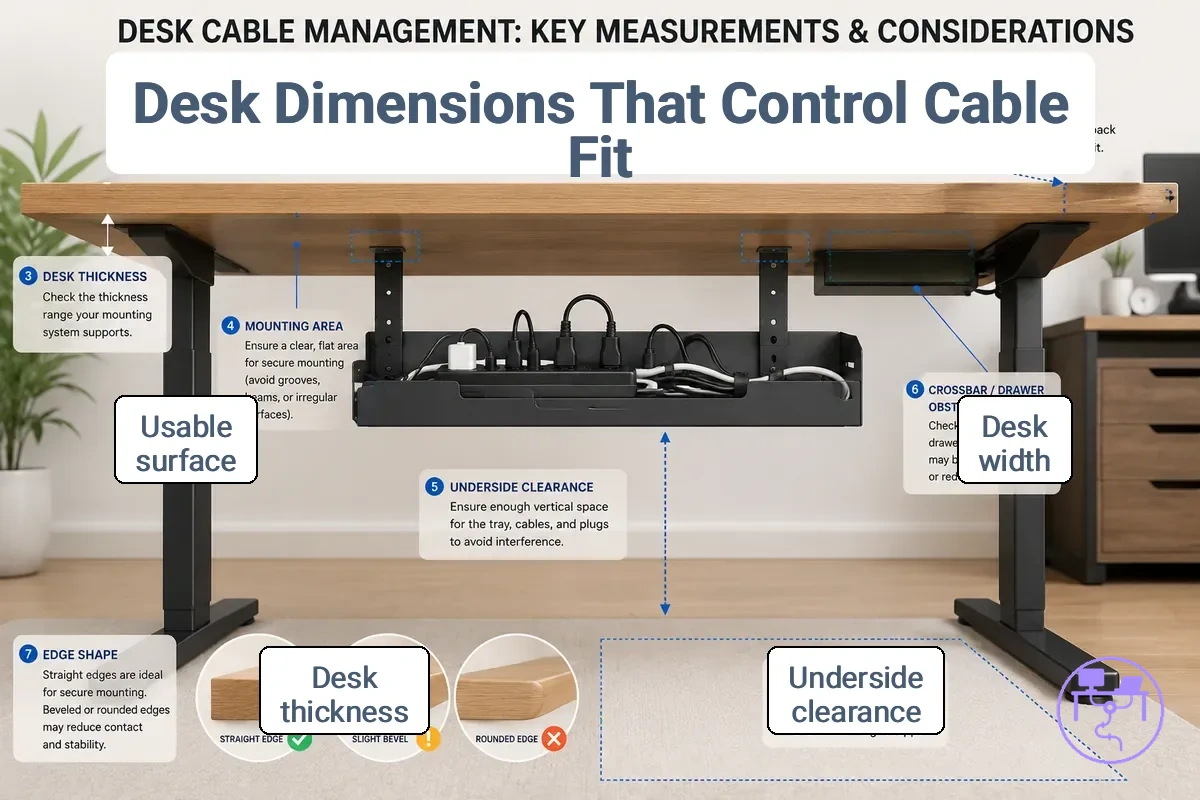
Desk measurements are easiest to assess in three groups: surface size, underside clearance, and edge or thickness conditions. Desk width and depth influence how much mounting space is available for a tray, channel, clamp, or adhesive organizer. Underside clearance determines whether crossbars, drawers, or other obstructions reduce usable space. Desk thickness and edge shape can affect mounting stability and the suitability of different attachment methods.
The table below summarizes the desk attributes that most often influence compatibility. Reviewing these measurements helps connect each desk condition to its possible fit effect before evaluating mounting options.
| Desk Attribute | Condition | Fit Effect |
|---|---|---|
| Desk width | Limited mounting span | May reduce space available for longer tray lengths or channels |
| Desk depth | Shallow usable surface | May limit mounting space and cable routing flexibility |
| Underside clearance | Crossbar, drawer, or other obstruction | Can reduce the available fit area beneath the desk |
| Desk thickness | Unusual thickness range | May affect clamp range and mounting stability |
| Edge shape and usable flat surface | Curved edge or limited contact area | May reduce adhesive contact or mounting position options |
Desk Thickness and Clamp Range
Desk thickness affects clamp fit because the clamp range must match the desk edge closely enough to maintain grip and stability. Compatibility depends on the relationship between desk thickness and clamp range rather than on either condition alone. A mismatch may reduce contact on the tightening surface and affect clamp fit.
Desk edge conditions can influence compatibility even when desk thickness appears suitable. A bevel, unusual lip shape, or limited tightening surface may reduce stable grip along the desk edge. A frame rail near the attachment point can create an obstruction that limits edge clearance or prevents proper seating of clamp-on hardware. Clamp fit may fail when the desk edge does not provide enough consistent contact for secure grip and stability.
Underside Clearance and Usable Mounting Space
Underside clearance depends on the usable mounting space available beneath the desk, not only on desk size. Compatibility is influenced by the clear underside area that remains after accounting for obstructions, access needs, and tray height. A larger desk may still provide limited usable mounting space when the mounting zone is restricted underneath.
- Check whether crossbars reduce the usable mounting space.
- Check whether drawers limit the available mounting zone.
- Check whether cable exits remain accessible after tray placement.
- Check whether tray height affects knee space and access.
- Check whether a modesty panel restricts the clear underside area.
- Check whether wall clearance limits placement near the rear edge.
Crossbars, drawers, and a modesty panel can reduce the under-desk space available for cable organization. Cable exits may remain easier to reach when tray placement preserves access around connected devices and routing paths. Tray height can affect both knee space and access within the mounting zone. Underside clearance is most useful when evaluated together with tray placement because both conditions influence usable mounting space.
Cable Tray Size and Cable Load Capacity
Cable tray size and cable load capacity should match the expected cable bundle to reduce overcrowding and preserve access. Compatibility depends on how tray length, tray width, and tray depth accommodate cable volume, cable count, and adapter bulk. A tray that appears large enough for cables alone may become less suitable when routing space and service access are also required.
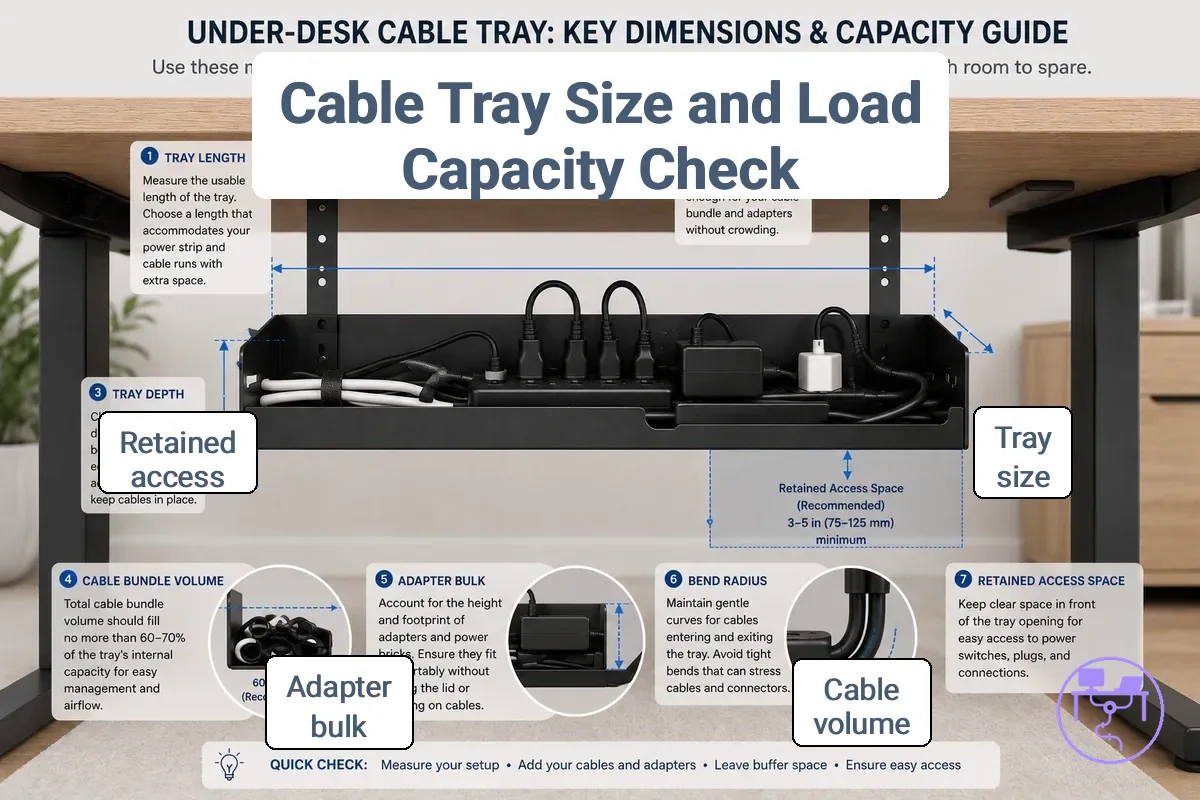
Cable count, cable diameter, and adapter bulk influence how efficiently space is used inside an under-desk tray. Higher cable volume can reduce retained access when cables occupy most of the available tray capacity. Bend radius also affects fit because cables may require additional routing space to change direction with less risk of strain. Cable load capacity depends on both physical support and available volume, so suitability can vary by tray design and mounting condition.
The table below separates capacity into cable volume, support considerations, and service access. If cable volume approaches the available tray space, adapter bulk limits organization, or retained access becomes difficult, a larger tray, an open basket, or a separate accessory holder may become more suitable.
| Cable Group Attribute | Capacity Condition | Possible Fit Outcome |
|---|---|---|
| Cable count | Higher cable volume | May increase overcrowding and reduce access |
| Cable diameter | Thicker cable bundle | May require additional tray space |
| Adapter bulk | Large adapters | Can reduce usable tray capacity |
| Bend radius | Limited routing space | May increase strain and reduce routing flexibility |
| Retained access | Dense cable arrangement | May make cable changes and maintenance less convenient |
Cable Bundle Volume and Tray Fill
Cable bundle volume affects tray fill because tray usability depends on the space that remains after cables, adapters, and excess length are placed inside the tray. A tray may appear suitable before use but become crowded when computer cables, monitor leads, charging cables, and cable slack occupy the available tray space. Higher tray fill can reduce access and make later cable adjustments less convenient.
- Check whether adapters occupy a large share of tray space.
- Check whether cable slack reduces access to individual cables.
- Check whether cable ties organize cables without creating unnecessary strain.
- Check whether monitor leads and charging cables remain easy to access.
Adapters can affect tray fill more than thin cables because their shape may reduce usable space around the cable bundle volume. Cable slack can increase cable bulk when excess length accumulates inside the tray. Cable ties may improve organization, but tightly grouped cables can reduce access and increase strain when repositioning is needed. Tray fill remains more practical when cable volume, adapters, and slack leave enough space for easier maintenance and later adjustment.
Large Trays for Heavy Cable Groups
A large tray can help when heavy cable groups need more tray span, distributed load support, and retained access under the desk. The benefit depends on whether the larger under-desk tray has enough rigidity and suitable mounting points for the expected adapter weight and bundled power leads. A wide tray may reduce crowding, but size alone does not confirm stability.
Tray span affects how far the cable load spreads across the desk underside, while rigidity influences whether the tray may sag under dense cable groups. Mounting points can help distribute load when they align with a suitable support area. Adapter weight and bundled power leads may require more space than thin signal cables because they can concentrate weight and reduce access. Larger tray fit still depends on available desk space, mounting support, and the usable underside area.
Power Strip Fit Inside an Under-Desk System
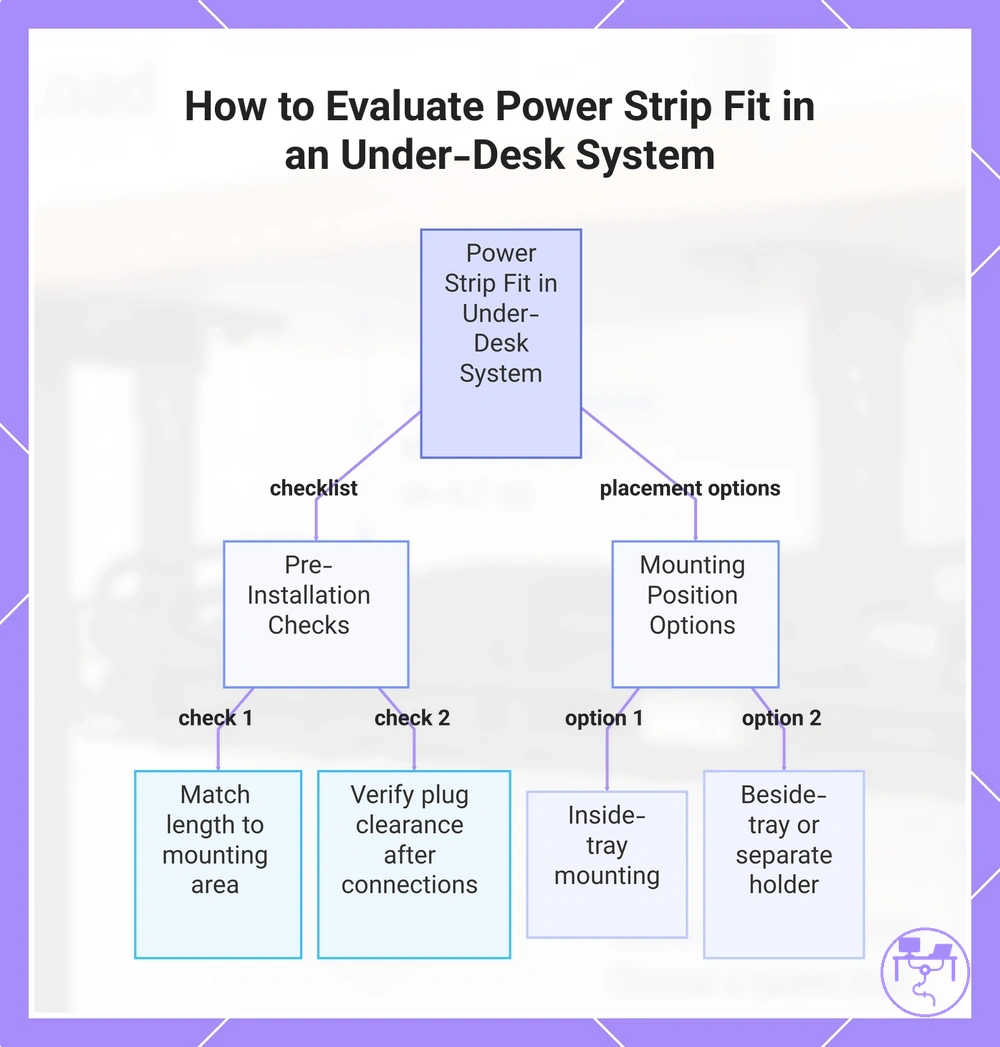
Power strip fit depends on size, plug clearance, and access within the under-desk system. A power strip may fit inside a tray yet still reduce usability if plug heads, adapter blocks, or cable exits create crowding. Fit also depends on whether the mounting position preserves switch access and ventilation space.
Outlet orientation can affect how plugs and cables occupy space around a power strip. Adapter blocks may extend beyond the strip body and reduce room for nearby connections. Plug clearance becomes more important when cable exits change direction within a confined area. A surge protector that fits by length alone may still offer limited access if outlet orientation and attached plugs occupy surrounding space.
Placement can change both access and crowding. An inside-tray position may keep cables contained but can reduce access when adapter blocks occupy tray space. A beside-tray position may preserve plug clearance and cable exits, while a separate holder can keep the surge protector accessible without sharing tray space with cable bundles. The most suitable mounting position depends on available space, access needs, and how the power strip integrates with the under-desk system.
Power strip fit is easier to evaluate when the following conditions are checked before installation.
- Check whether power strip length matches the available mounting area.
- Check whether plug clearance remains available after connections are attached.
- Check whether outlet orientation affects cable routing or access.
- Check whether adapter blocks reduce usable space around the power strip.
- Check whether switch access remains unobstructed after placement.
- Check whether cable exits remain reachable without excessive crowding.
- Check whether ventilation space remains available around the mounting position.
This chart shows the key pre-installation checks and mounting position options for fitting a power strip under a desk.
Mounting Method Compatibility Under the Desk
Mounting method compatibility depends on how a clamp, screw, or adhesive attachment matches the desk surface, contact area, load type, and removability requirements. A mounting method may be suitable for one desk condition but less suitable for another when the desk material, surface finish, or load characteristics change. Stability and fit depend on the relationship between the attachment method and the underside environment.
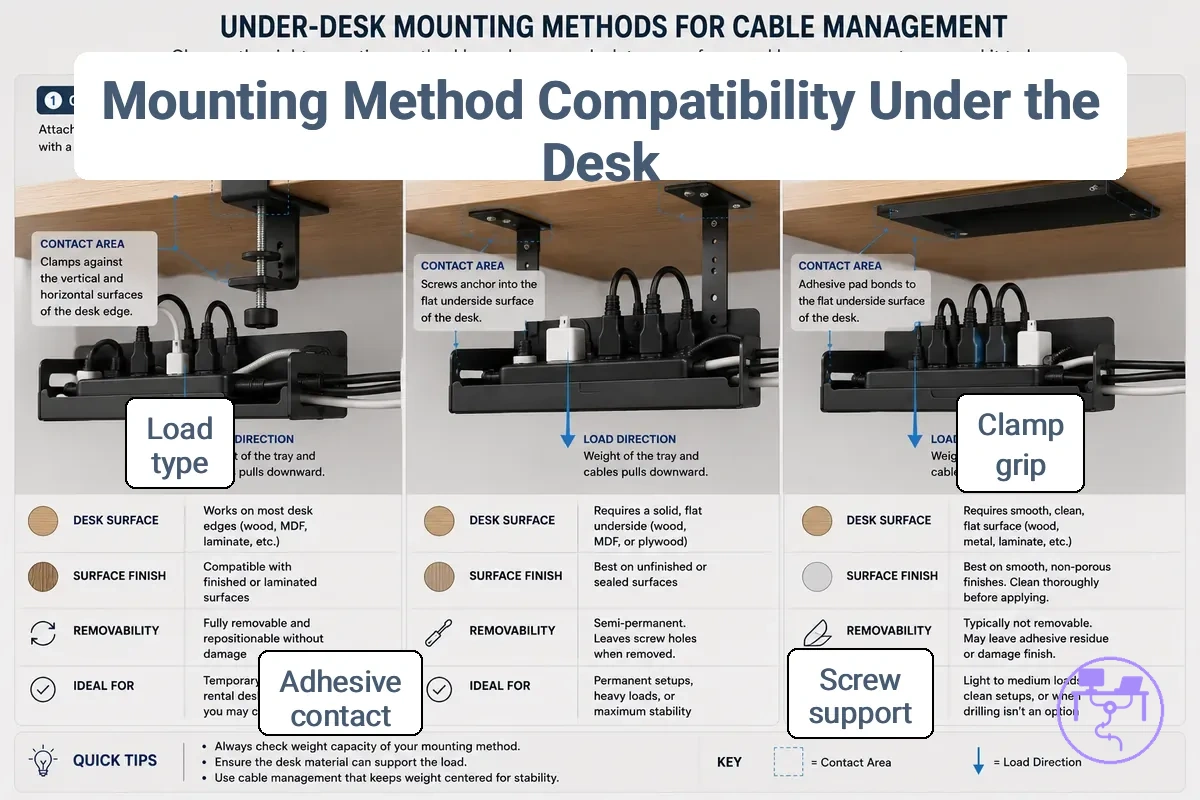
Desk surface and load criteria influence whether a clamp, screw, or adhesive mounting style can provide practical under-desk mounting. A clamp depends on desk edge access, grip, and contact area. A screw depends on desk material and load type for stability. An adhesive attachment depends on surface finish, available contact area, and acceptable removability because removal risk can vary by desk condition.
The comparison below highlights the main suitability signals for each mounting method. Use these criteria to identify when a fit decision may favor one option or when a mounting method should be avoided because the desk surface or load condition is unsuitable. These compatibility checks can support broader installation planning factors.
| Mounting Method | Key Fit Criteria | When It May Be Unsuitable |
|---|---|---|
| Clamp | Desk edge access, grip, contact area, removability | May be unsuitable when the desk edge provides limited grip or contact area. |
| Screw | Desk material, load type, fastening support, stability | May be unsuitable when the desk material does not support the intended attachment. |
| Adhesive | Surface finish, contact area, load type, removal risk | May be unsuitable when the surface finish limits adhesion or removability is a concern. |
Clamp, Screw, and Adhesive Mounting Limits
Each mounting method has a limit that can affect holding strength under certain conditions. Clamp grip, screw bite, and adhesive contact depend on desk finish, load direction, removal risk, and the way the attachment interacts with the desk surface. An attachment limit may reduce suitability even when the mounting method appears compatible.
- Clamp grip: Clamp grip may weaken when the desk edge provides limited contact area or when load direction reduces grip strength, which can affect holding strength.
- Screw bite: Screw bite depends on desk material and available engagement depth. Limited screw bite may reduce stability and holding strength under load.
- Adhesive contact: Adhesive contact depends on desk finish, contact area, and removal risk. Suitability may decrease when surface conditions limit consistent contact.
These mounting limits depend on desk material, desk finish, and load direction, so holding strength can vary by attachment condition rather than by mounting method alone.
Desk Surface Strength and Mounting Stability
Desk surface strength affects mounting stability because the mounting point must support cable load and the forces created by load direction. Mounting reliability depends on desk material, surface support, and underside conditions rather than on the attachment alone. Failure risk may increase when the mounting point provides limited support for the intended load.
Particleboard, solid wood, metal frame structures, laminate finish surfaces, hollow sections, and underside rails can influence mounting stability in different ways. Screw depth may affect holding strength when available material limits engagement, while adhesive contact may vary with laminate finish and surface condition. A metal frame or underside rail can change the available mounting point and support area. Desk surface strength and mounting stability depend on the combined effect of desk material, attachment conditions, and load direction.
The following conditions may indicate a higher failure risk:
- Hollow section areas may provide limited surface support.
- An underside rail may restrict or alter the available mounting point.
- Laminate finish may affect adhesive contact suitability.
- Limited screw depth may reduce holding strength in some desk materials.
- Load direction may concentrate force on a smaller support area.
Mounting stability can vary by desk material and load condition, so it may be unreliable to assume that all surfaces support the same load in the same way.
No-Drill and Adjustable Tray Fit Conditions
No-drill and adjustable tray fit depends on desk edge access, underside clearance, tray span, and expected load. These designs can help address fit constraints when drilling is unsuitable or when mounting conditions may change, but suitability varies by desk configuration and cable requirements.
A clamp-on tray depends on desk edge access, desk thickness, and clamp range, while an adhesive channel depends on surface condition and expected load. No-drill cable management may be less suitable when a desk edge limits clamp contact or when surface conditions reduce adhesive contact. Mounting suitability depends on the relationship between the attachment method and the available mounting area.
An adjustable tray can help when desk width, cable routing needs, or available mounting space vary. Adjustable width and tray span may improve fit on a narrow desk or within a restricted mounting zone, but adjustment range alone does not confirm compatibility. Tray span should still align with the available support area beneath the desk.
Expected load affects stability regardless of whether the design uses removable hardware, a clamp-on tray, or an adhesive channel. A larger cable bundle, power accessories, or concentrated cable weight may change stability conditions. The trade-off between removable mounting and holding strength often depends on desk thickness, mounting support, and cable load rather than on the mounting style alone.
The following criteria can help evaluate suitability before choosing a no-drill or adjustable under-desk tray. Reversible mounting may suit users who want removable hardware, while adjustable sizing may help when desk dimensions create fit constraints. Thick desks, narrow desks, and changing cable setups can require different compatibility decisions depending on available clearance, tray span, and expected load.
Here are product examples that may make comparison easier. Before buying, always review the compatibility criteria, essential features, and product details.
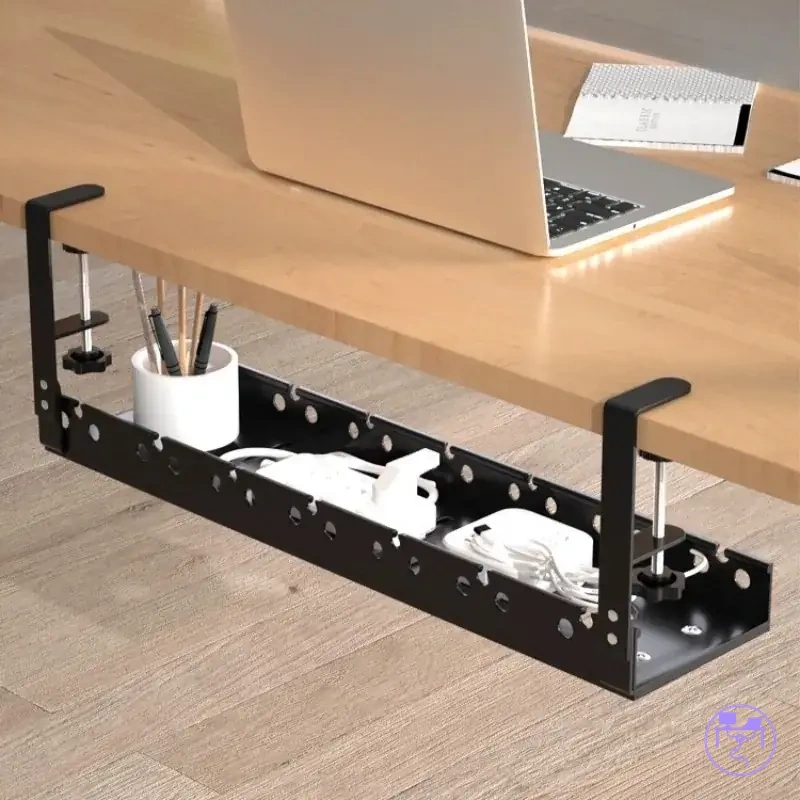
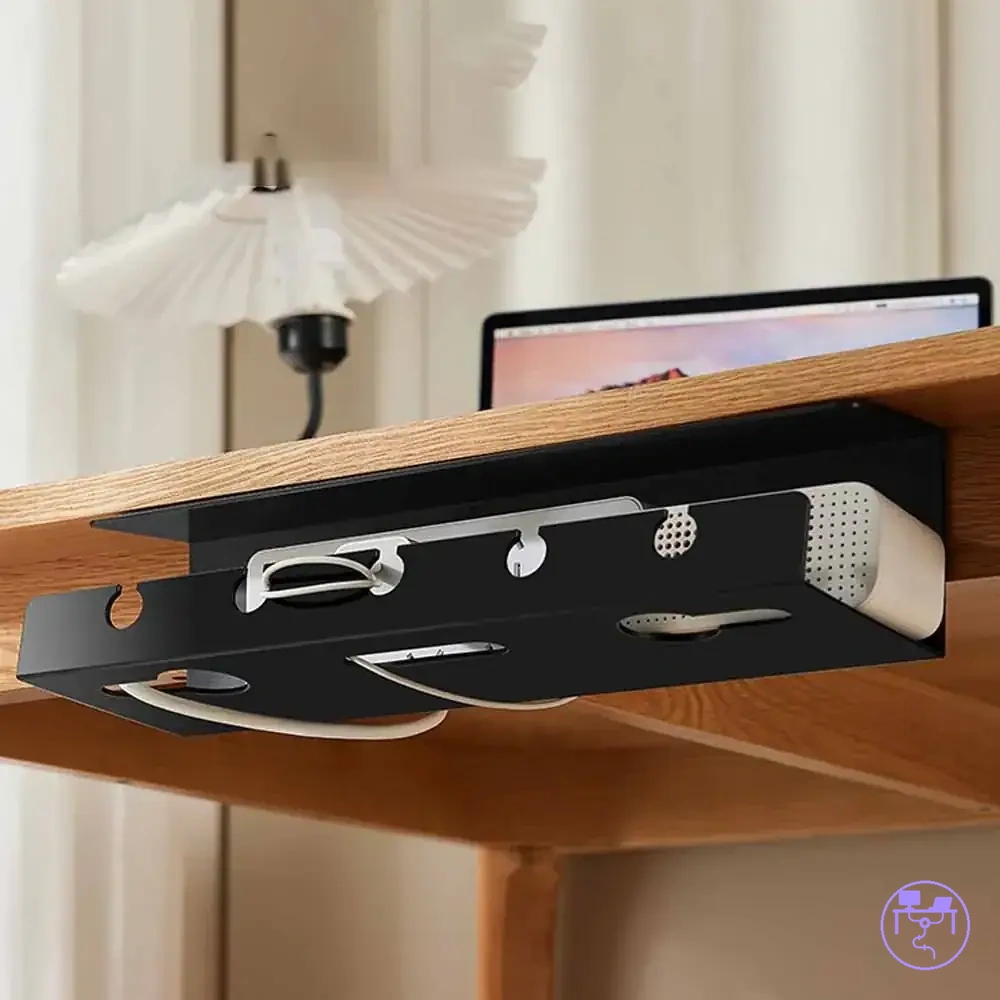
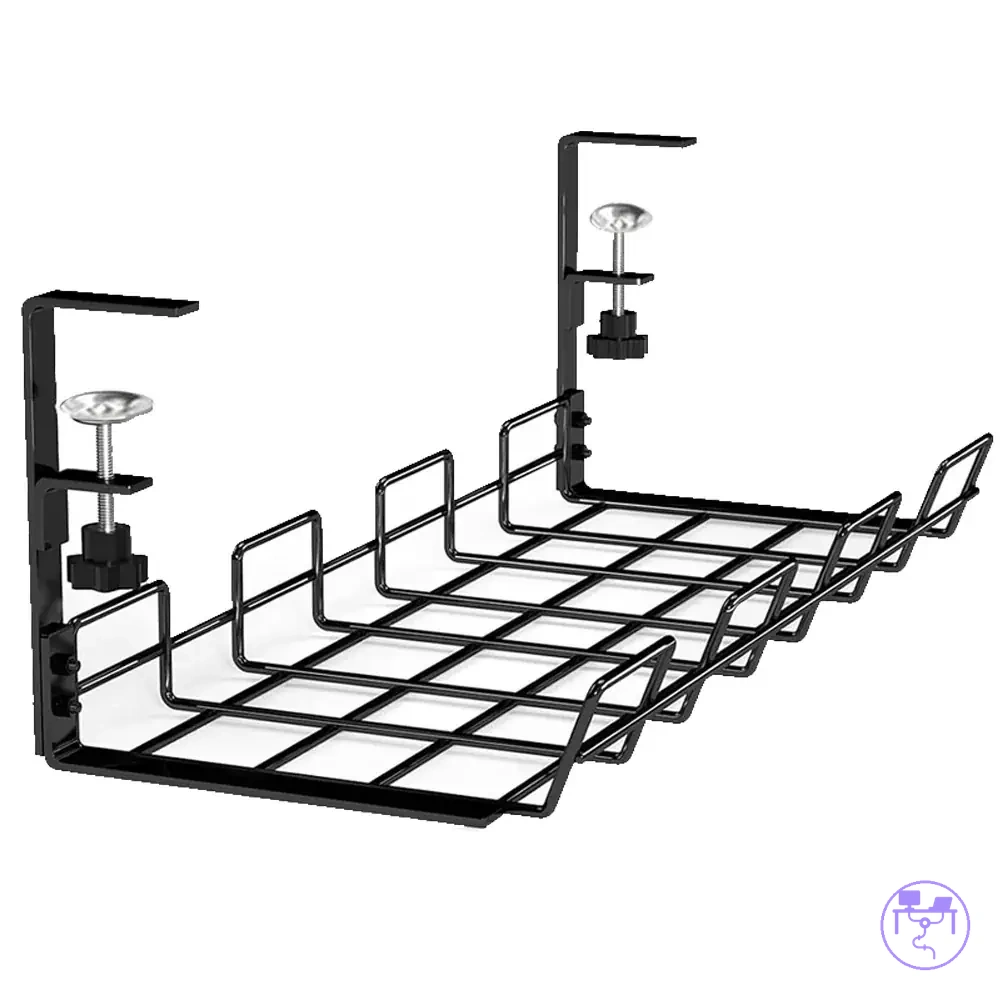
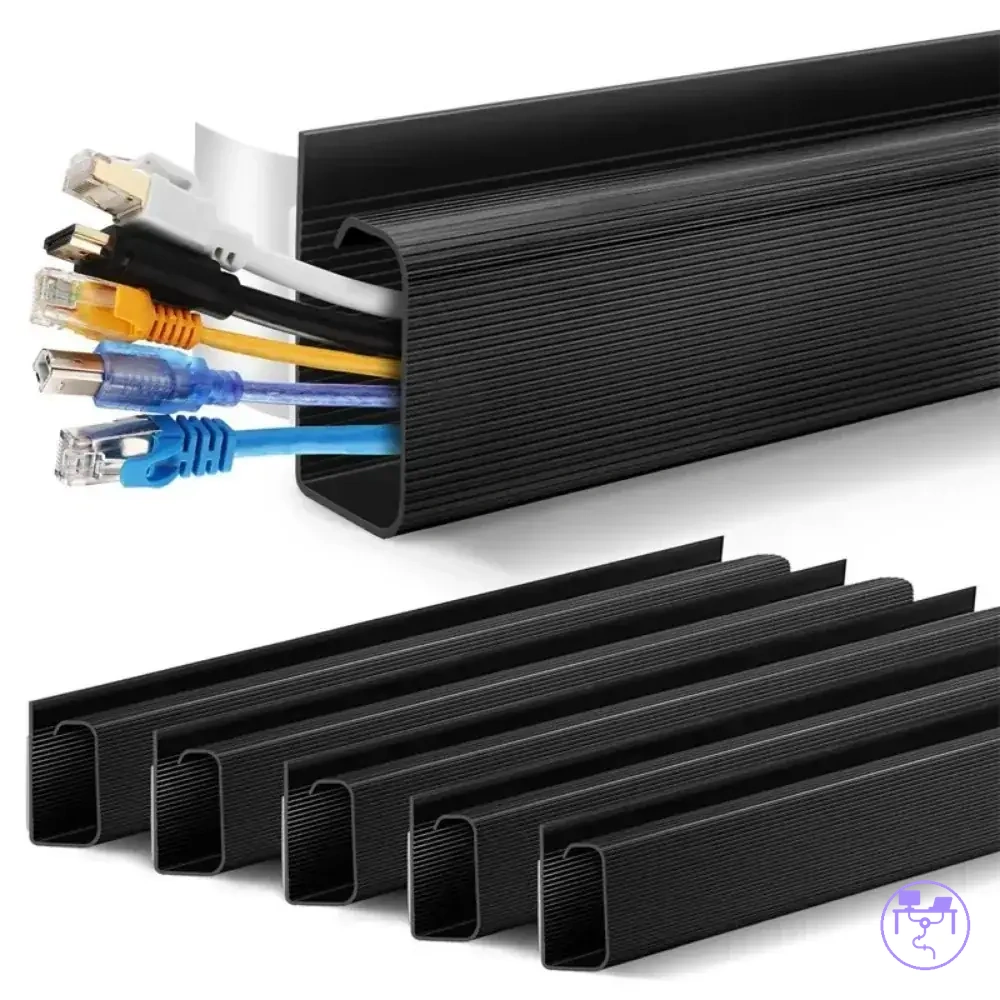
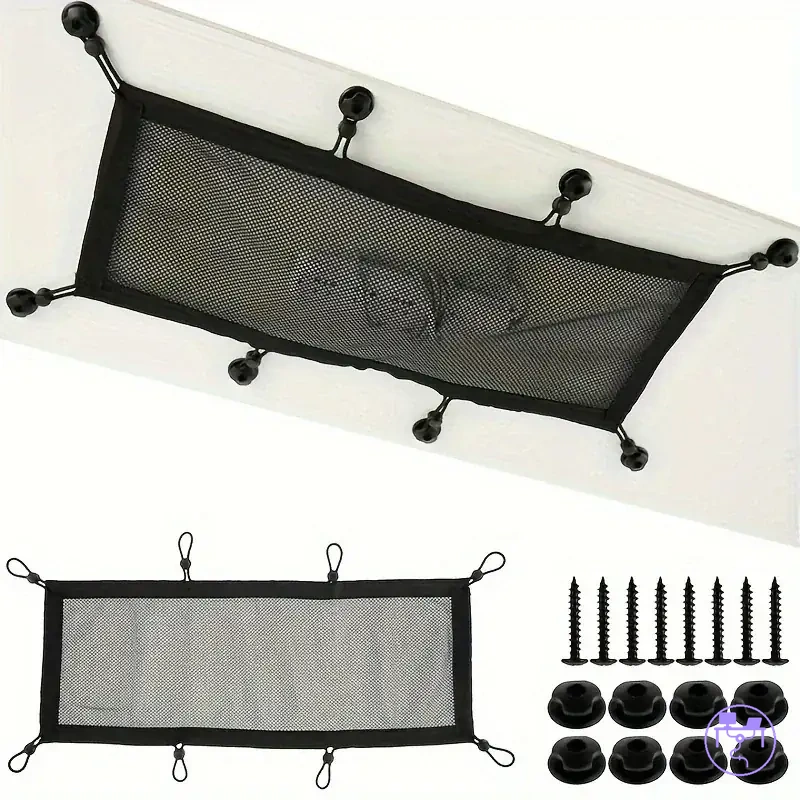
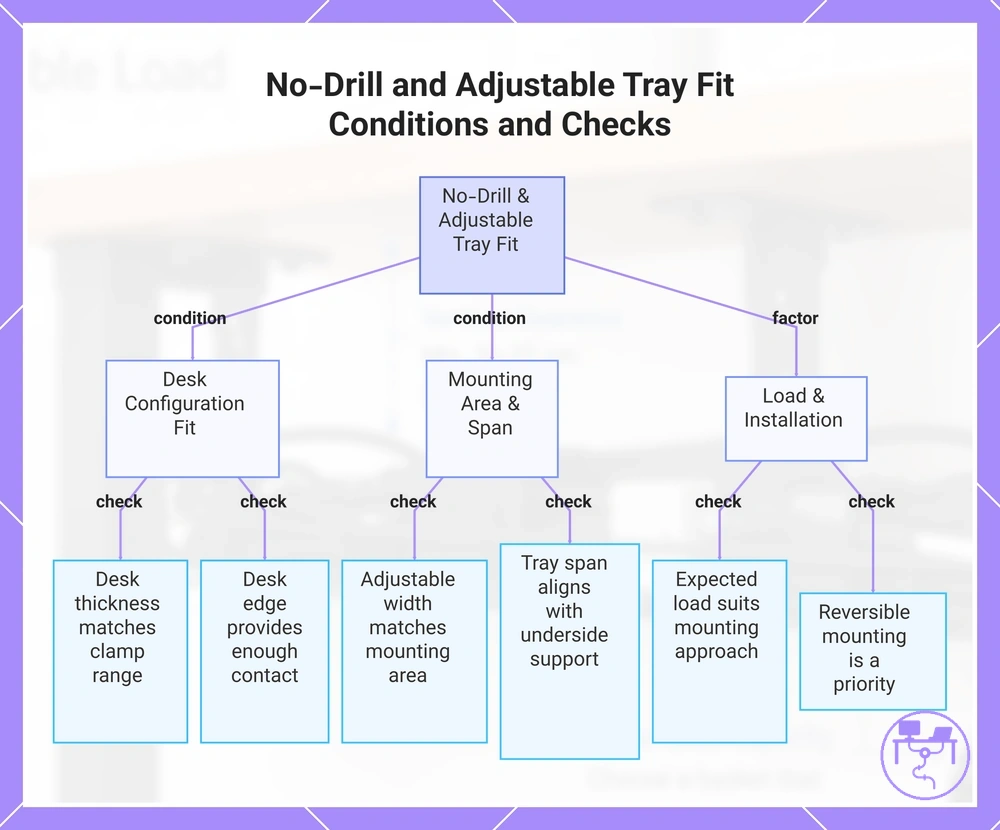
- Check whether desk thickness matches the clamp range.
- Check whether the desk edge provides enough contact for a clamp-on tray.
- Check whether adjustable width matches the available mounting area.
- Check whether tray span aligns with underside support conditions.
- Check whether expected load suits the selected mounting approach.
- Check whether reversible mounting is a priority for future removal.
This chart shows the key fit conditions and checks to evaluate before choosing a no-drill or adjustable under-desk tray.
Fit Limits for Moving Desks and Larger Workstations
Fit compatibility for moving desks and larger workstations depends on cable slack, clearance, routing tolerance, and workstation load. These setups may require additional movement allowance because desk motion, cable count, and device placement can change the space needed for stable cable management. Fit limits often depend on how tray position, cable length, and expected load interact during normal use.
The standing desk travel path can affect compatibility because cable slack must accommodate movement between desk positions. A floor-to-desk run may require additional routing tolerance when a height-adjustable desk moves through its travel range. Strain points can develop when cable length, tray position, or clearance do not align with the movement path.
Movement and workstation-size conditions can be compared through a few common scenarios:
- A moving desk may require more cable slack and clearance than a fixed desk because the standing desk travel path changes cable position.
- A larger workstation may increase monitor cable count, device cable count, and adapter bulk, which can affect tray position and available routing space.
- A sit-stand desk with a floor-to-desk run may need greater routing tolerance when cable movement occurs across a larger travel range.
Larger workstations can change fit requirements because monitor cable count, device cable count, and workstation load may occupy more tray space and reduce access around cables. Compatibility depends on whether tray position, cable volume, and routing tolerance remain suitable for the expected load. This section covers fit limits only, not the full routing or setup method. For movement-specific considerations, see standing desk cable clearance. For examples involving larger display arrangements, see multiple monitor cable management.
This chart shows three common scenarios that determine fit limits for moving desks and larger workstations, focusing on cable slack, clearance, routing tolerance, and load.

Compatibility Checks Before Selecting a Desk Cable Management System
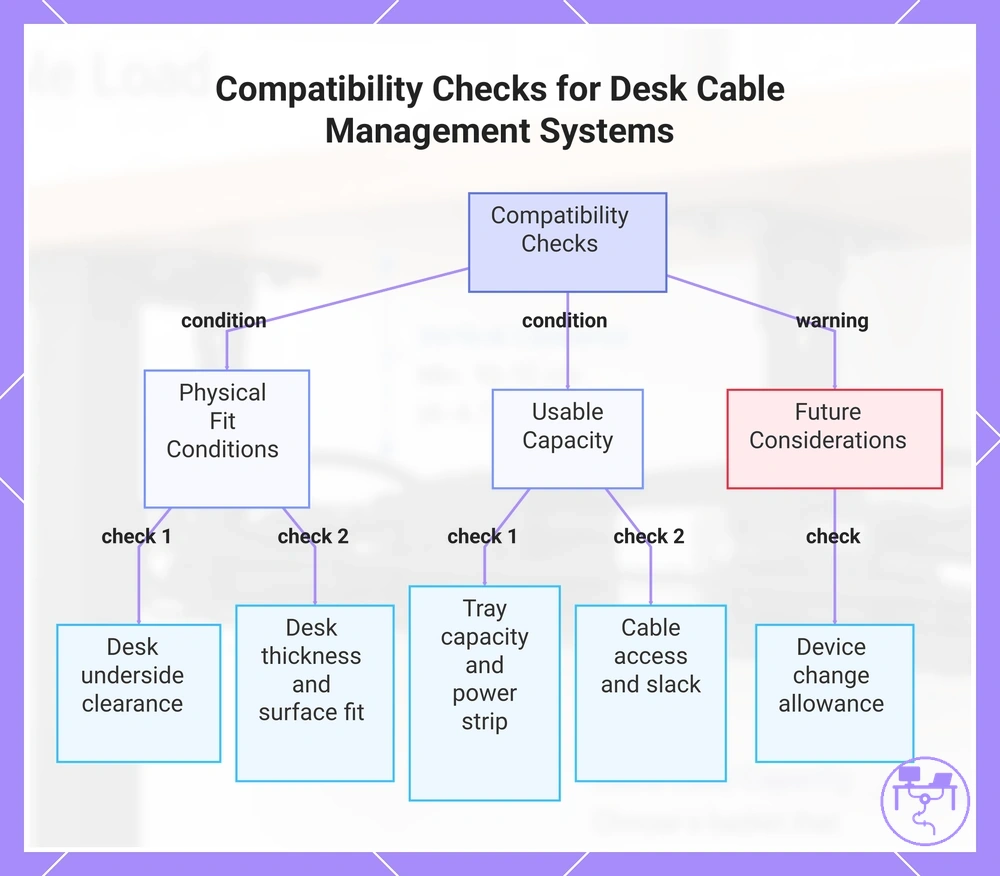
Compatibility checks help verify whether a desk cable management system can fit the desk, cable load, mounting conditions, and future usage needs. A fit decision should combine desk fit, tray capacity, mounting method, power strip access, and movement constraints rather than depend on one feature alone.
The following fit checklist summarizes the main conditions to review before selection:
- Check whether the desk underside provides usable mounting space.
- Check whether desk thickness matches the intended mounting approach.
- Check whether the mounting surface supports the selected attachment method.
- Check whether tray capacity can hold the expected cable load.
- Check whether power strip size preserves access and placement options.
- Check whether cable access remains practical after setup.
- Check whether cable slack supports movement constraints when needed.
- Check whether future device changes may increase space requirements.
Desk and mounting conditions define the physical fit. The desk underside, desk thickness, and mounting surface determine whether the system can be positioned within the available space and supported by the chosen attachment method.
Cable load, tray capacity, power strip size, cable access, and cable slack define usable capacity after placement. Future device changes can affect the fit decision because added cables, adapters, or movement constraints may change access and routing needs over time.
Must-fit requirements should be verified before adjustable preferences. Desk underside clearance, desk thickness, mounting surface suitability, tray capacity, and power strip access usually define basic compatibility, while layout flexibility and expandability are adjustable preferences with possible trade-offs. Use these compatibility checks to choose a compatible system based on must-fit requirements first.
Here are product examples that may make comparison easier. Before buying, always review the compatibility criteria, essential features, and product details.
This chart groups the key compatibility checks for selecting a desk cable management system into physical fit, usable capacity, and future considerations.